Tuesday, February 12, 2013

I Thought We Were Beyond This: Reminders of Race in a Few Short Snippets

1. Something to think about as we watch Pres. Obama's State of the Union Address when we see the Republican party's contemptuous display of disrespect for the President. And did I mention they invited this asshole to the SOTU address?

2. In the days of Arthur Kunstler Black Rage would have been an arguable explanation for the asymmetrical warfare launched against the notoriously corrupt LAPD.

3. And the children of our country continue to be slain, some are slain faster than others.


                                                                  Hadiya Pendleton
                                

Monday, January 21, 2013

Peace, Progress and Policy: Happy King Day

  Given the momentous nature of today January 21st, 2013, we at Jambangle believe it right and proper to take time to recognize the momentous nature of today's occurrences. We simultaneously celebrate the birth date of Martin Luther King, Jr.(activist and theologian) whom, if he were still alive, would be 84 today. And we also recognize the beginning of the second term of the 1st African American president, Barack Hussein Obama.  These events speak to the possibilities of human achievement. King whose message and adult life was committed to achievement of a radical peace, that would embrace all of humanity and the establishment of pervasive justice as the foundation of our civilization, is celebrated, honored and followed as a model for the most one of the most progressive visions offered by a citizen of this nation. King's unqualified commitment to peace, are deeply relevant to the times in which we live. The US' constant state of war (Iraq, Afghanistan) have done irreparable damage to the people's of those nations, strain the credibility of international structures of governance and wear away at the fabric of our own society, reflect the same hunger for war that enshrined the nation 4 decades ago. King's message remains tragically necessary for our times. The necessity of King yet lives even as his body has expired. Yet, despite our failure to grow beyond the fear and violence of our international domination, the fact that we take time to remember his commitment to the creation of a more perfect state of living, his "Beloved Community", the fact that there still burns the flame of his vision and the desire to nurse it to higher degrees, suggests there may yet be hope for us as a nation and a species. Today is a day of celebration as we remember King and his work we implicitly celebrate the better angels of our own collective natures, for he is but a small piece of a larger possibility within us all. I believe in peace.I believe in justice. And I believe peace and justice can be achieved.
  "Fondly do we hope and fervently do we pray, that this great scourge of war will pass away." And fondly do we hope that our newly sworn in President will take to heart the work of Dr. King and truly embrace it as the center of his policies. For all of his rightly celebrated accomplishments President Obama, and the history making achievements of his elections, the President continues the ways of war against un-offending communities in Afghanistan and Pakistan. As Vietnam ate away at the hope for an America renewed, drone strikes and inflated Pentagon budgets eat away at the lives of America's poor and working peoples. In the midst of today's celebrations, in the midst of the pomp and pageantry we can not forget that the point is to work toward the more perfect union and the work of our ancestors is not yet done.

Monday, January 14, 2013

Of "N-Words" and "Niggers"

This recent report on Quentin Tarantino's backstage presser at the Golden Globe leads me back down well traveled paths regarding America's most debated, provocative and complex phrase. The Salon.com article states that in a back stage interview with the press Tarantino's use of the word "Nigger" so disturbed the reporters that issued "audible gasps" due to his word choice. It would seem that Tarantino assumed the press would return to the question of the use of "nigger" in his character's mouths and was prepared to continue the conversation. Though the conversation was not reported on verbatim (despite the seeming explosiveness of his word choice), Tarantino apparently was on the verge of violating all that is sacred and holy among the Hollywood beat reporters. Clutch the pearls! I am not going to defend nor condemn, Quentin Tarantino and his choices, there are moments in his films where I believe his use of "nigger" is gratuitous, incredible (as in lacking credibility) pornographic.


This is a cringer due to the lack of organic placement of the term and Tarantino's visible excitement at its use. However, there are times when I believe his placement to be reflective of his characters and their social/cultural dispositions.


The ultimate merits of these two types of instances I leave to the reader but I will say that if Tarantino in his interview was using the word as an object, as in "the use of 'nigger' in my movies" vs. as a subject or signifier as in, "that nigger right there pissed me off", if even in vapor inducing repetition, than I would prefer that to the use of the weak kneed, "n-word". I for one could not support the absolute banishment of the word, nigger, from public use. There are moments clearly where it is not appropriate or appreciated but it remains a part of the English language and substituting it with a passive aggressive attempt to be sensitive to the feelings of Black people is as cowardly as the use of the word itself can be malevolent. I do not write this out of some attempt to justify the use of the word among Black people. I use the word and understand what I mean when I use it in the various ways that I use it and have come to understand the irrationality of trying to explain that. Either you know or you don't. However I refuse to buy into the "n-word" until this society shows as much passion for prison abolition as it does for the substitution of the "n-word" for the word "nigger". I refuse to buy in to the "n-word" until this society shows as much shock over the liquidation of our civil liberties under the "War on Drugs as it does over the use of the word "nigger" as an object in context of larger points. And finally I will buy into the "n-word" when the the disgust and outrage over the history and circumstances that gave the word "nigger" such atrocious power equals the disgust and outrage that is ginned up over the use of the word in reasonable context.

Update: This is an example of the problematic use of the word "nigger".

Friday, January 11, 2013

Making Sense of "Django", Part I

In this special edition of Jambangle, Charles Peterson (CP) and The Detective (TD) hash out Quentin Tarantino's latest movie Django Unchained. Part one is below.


TD: Hope you had a good holiday season, brother. Where to start on the monster that is Django? There's so much in this thing.  So, I'll start off with my initial impressions.  First and foremost, I have to admit that, when it comes to movies that dare to even brush up against the issue of slavery - let along forcefully confront it - I feel like we're starved and stunted. Seriously, when was the last time you saw a movie that dealt with slavery in any significant way? Lincoln simply gave us the standard stoic black characters - you know, the ones that smile and nod approvingly before shuffling off of the screen, never to be seen again. Who's given us a halfway decent depiction of slaves or black folk in the age of slavery prior to Lincoln? Who's given us a character that we can sink our teeth into?  Do we have to go back to Amistad circa 1997? I just finished another article that mentions that Reginald Hudlin, one of the producers of Django, and a successful director and producer in his own right, has been trying to get a movie on the Middle Passage done for the last two decades, to no avail. Danny Glover's biopic of the Haitian Revolutionary Toussaint L'Ouverture is in a state of suspended animation, a 30-year old ball of potential energy. So, it's not like there's a lack of interest on the part of black directors/producers to make films that deal with slavery. It's just abundantly clear that black directors/producers will never, ever, get all of the green lights necessary to make a cadre of movies pertaining to slavery. Historian and writer Jelani Cobb, a thoughtful critic of Django, starts his critique of the movie saying as much. So, when we get down to it, isn't this titanic dearth of representation the first fact we have to deal with as we contend with this movie?


CP: It goes without saying that a Black director could not get a film about slavery made. But that to me is not the question, rather what would be the tone of such a film? Lincoln suggests the manner in which such a film would be made. I think it may be necessary to step back from the film about slavery as some sort of religious icon. I am not convinced that overtly committed political directors could avoid the necessary reverence. The solemn, stoic, long suffering Negroes of Lincoln and Amistad seem to be the way to depict the enslaved. Tarantino's mash-up breathes something vivid in to a rare yet strangely moribund depiction of Black people. I am not sure if the analysis of the film should start on Hollywood's fear of righteous Black anger. Let's take that as given. I am not sure this connects to Spike Lee's criticisms of Tarantino but it may be worth it to ask what about Tarantino (aside from being white) that gives him the green lights to make a film. Let's be honest it is not just Black director's inability to get films about slavery made, Hollywood in general isn't interested in the topic. So why Tarantino?


TD: You're certainly right to suggest that the reverential depiction of slaves has been (and will no doubt  continue to be) a problem. When it comes to depictions of slavery, we don't have a whole lot to choose from.  The stoic slave has been the cinematic corrective to the depiction of black folks as beasts and such. So, when we get slaves shown at all, they're given gravitas and...wait for it..."dignity." As others have said, slaves are usually foils to set up benevolent, anti-slavery white folks who are determined to "give us free." Sadly, that image is far from moribund - it's vibrant and well-fed. Interestingly, one of the more consistent critiques of the movie that I've seen from black folks (scholars in particular) is that the movie shies away from more substantive depictions of day-to-day subversion and resistance.  "Why aren't there more rebellious people in this movie?" goes the line in a number of places.  At any rate, I think QT is uniquely suited to make this type of flick. First off, as a student of film, he's stated in an interview that he was seriously worn down by the "soul-killing...victimization" that defined most movies that dealt with slavery.  I'm with him on that. On the other end of the spectrum were historical "capital H" documentaries that told the story of slavery from a factual basis. He didn't want to do that either. Instead, he wanted to give us, as you say, the mashup: part western adventure, part travel film, part romance - where a brother gets to save the love of his life and, in QT's words, "have the catharsis of painting the walls" with the blood of slaveholding tyrants.  Secondly - he's been gearing up to do something like this for some time. Let's review his body of work: western-style, lone avenger type flick? Check. Revenge flick? Double check. Fantastical riff on historical narrative? Check. Willingness and ability to give us buckets of blood in the process of redemption and revenge? No doubt. Plus, when you take into account QT's ability to mash different genres together - I think that may be the linchpin that makes this whole endeavor possible, because I can't see this movie being made any way except as a  spaghetti western of sorts. Slavery purists and folks overly burdened by the need for authenticity (regardless of that pesky fiction/nonfiction divide) were never going to get a movie that would make them nod with approval. But the rest of us got a movie that, in my view, worked on multiple levels and did what it set out to do. So, do you think QT is suited for this type of endeavor?

CP: That damnable dignified Negro! Better than what has been presented and yet still not completely who we are! Certainly the Mother Jones review of Django touches upon QT's failure to show more regular and elaborate forms of resistance amongst the community of the enslaved. I believe his focus on the conventions of the narrative and investment in an American atomic portrayal of heroism (I can't call it exclusively masculimist because there is KIll Bill Vols. 1 and 2) limits a more possible accuracy (trying to get the proper level of speculative language when discussing the expectations of historicity in a fictive work). In short John Wayne, Alan Ladd, Clint Eastwood, Henry Fonda, Gregory Peck, Kirk Douglass, et al, when gun slinging all worked alone (Gunfight at the O.K. Corral and The Magnificent Seven are spectacular exceptions to the rule). And they tend to save damsels instead of working with women. So QT's commitment to genre specs limits the community driven nature of historic resistance to slavery. And arguably, his writing of history could have indulged far greater revenge fantasies. If Adolf Hitler could burn to death in a Parisian movie theater in Inglorious Basterds then why not have Django's ("the D is silent") revenge on Candieland spark a mass revolt among the enslaved in that part of Mississippi? So a truly epic scale was missed as QT loses the opportunity for swarms of sweaty, angry Black people to surge across blood drenched cottony white fields.


Despite this I will accept the emotional and cultural historicity of the film as we see many of the tropes of Black cultural life on display and get a strong sense of the psychological dynamic from which they arose. From warrior to trickster, the film gives us a complex range of ways Black people functioned in the institution.  I feel as if Django should have kept the early Afro, astride his horse like the bastard child of Frederick Douglass, Nat Turner and Jim Brown as an amalgamation of assertive personhood in Black culture and history. And we cannot ignore the flip trickster side of that in Sam L. Jackson's turn as the disingenuous Star Wars Emperor, like, Steven. All of this to say. I continue to reflect on a certain level of engaged cultural truthiness within the film and am dubious about pinning the film to any sort of historical accuracy.

Monday, December 24, 2012

Twas the Night Before . . . .

I am not sure which of these classics is more representative of me and my feelings about this time of year.


or


or


 or


or

or


Perhaps I should put down the either or thing and just embrace that I am fully of the late 20th century. Each one of these songs carries me back to such almost transcendent moments in my life . Each one speaks to the hopes this time of year carries with it. They are creative, inventive and emblematic of an earnestness  and timeliness that popular culture can capture. Each in their own way have meaning and beauty and the grace of renewal that is the harbinger of year's end and it is our sincere hope that you are swaddled in the promise of wonders to come.
Season's Best to you and yours from Jambangle!

Friday, December 21, 2012

Election 2012 in Historical Perspective, Maybe (Part II)

In the wake of the presidential election, Chihambuane wondered what I thought about an article on Naked Capitalism by Richard Kline. In his piece, Kline makes some notable comments about the actual motivations of the voting electorate. He's not buying the standard narrative that suggests that the 2012 election was the harbinger of some significant political realignment. As he tells us at one point, "The main reason this vote 'seemed close' was that Obama's side had little faith in him or his record, and did not turn out in close to their actual numbers." All Obama had to do, according to Kline, was "convince his side of the electorate that 'he cares about people like us.'" As for Romney, a candidate who had "little love from his party", his path to victory rested on his ability to convince the base of the Republican Party that "he was a nativist bigot."  Interesting and provocative, but these bon mots are not the main portion of Kline's post.

What Kline spends the bulk of his time exploring is the possible implications of the fact that the rural vote in the country is almost completely contained within one party - the Republican Party.  Mind you,  Kline's not trying to construct an operational theory of post-20th century American politics here; it's just a blog shot. But he does an admirable job of laying out one of the more noticeable schisms in American politics, one that does (even after all of these years, cuz this ain't new) remain under-analyzed. Blue urban centers surrounded by a sea of Red - what's that about? Well, as it turns out, it's about a host of things. Initially (from, say, the 1740s to the middle of the nineteenth century) rural folk across the country were culturally (and therefore largely politically) homogenous; they had a lot in common with the elites who ran the cities they were closest to.  Moving into the 19th century, rural folks were still  beholden to the local political elites, though the Civil War and other political/economic realities softened this allegiance, making people politically more fluid, and likely to join the party that appealed to their interests. The Great Depression also served to keep rural folks beholden to the political party of local elites.  We see the rate of Democratic Party affiliation for rural whites seriously erode during the Civil Rights era. This is a story that's been told many times before: race, economics, culture, regionalism and a host of other factors conspired to send rural whites into the Republican Party, where they remain to this day. It is from this perch that rural whites and other conservatives have launched into an urban/blue-rural/red antagonism that, to hear Kline tell it, is going to be an intractable element of American politics for the foreseeable future. Rural red wants to starve Urban blue of federal funds; Urban blue doesn't "get" rural red, "and really doesn't care to." Besides, the demographics are increasingly in Urban blue's favor; they're growing, while Rural red continues to shrink.  "There simply isn't much of a basis for compromise because the factions are culturally distinct," Kline tells us. "It's not just a matter of political leanings, or a simple few issues. It's everything."

Robert O. Self, an associate professor of history at Brown University, has written a book that will go a long way towards helping us figure out our current political landscape, and towards filling in some of the blind spots in Kline's musings.  Self's book, All in the Family: The Realignment of American Democracy Since the 1960's gives us a new tool with which to view the shifting politics of the post-war period - the American family.  Self contends that the struggles of the sixties over race, sexuality, gender and economics, all centered on competing notions of the nuclear family, and on the shift from "equal rights" to "family values." In the center of the conversation is the mythic notion of the nuclear family, neatly defined (as most myths are) as white, middle class, heterosexual. Even while this iconic and largely artificial construct was being contested by blacks, women, gays and others, it's political power remained formidable; both sides of the American political spectrum sought to define its parameters.  According to Self, liberal social/economic policy from the New Deal to the Great Society were designed to make the ideal family structure "attainable for more Americans than ever before." Self calls their operating system "breadwinner liberalism."

By 2004, the nuclear family had been transformed into a repository of conservative ideology. Ronald Reagan, George W. Bush, Pat Robertson and a host of other conservative "culture warriors" had successfully shifted the national political impetus from one that sought to expand the notion of family towards to one that wanted to defend traditional notions of family and cast the liberalization of the nuclear family as a moral (and also political and economic) assault on American families and values.  Self asserts that it is this battle, the battle to define what a "family" looked like, that "drove the larger transformation of American democracy over three generations, remaking a center-left social welfare polity established between 1934 and 1972 as the center-right free market system that emerged from 1973 to 2004." Richard Nixon's "silent majority", the political rise of conservative christianity in the 1970's, the legalization of abortion and the fracturing of the New Deal coalition paved the way for the right's "opposition to the broad liberal left's idea of expanded citizenship - of an expanded body politic." Self calls the operating system of American conservatives in this endeavor "breadwinner conservatism." The family became the central battleground for a moral re-visioning that had explicit political and economic consequences; indeed, the family was the first front in the right's successful reframing of the federal government's role in American life.

Suffice it to say, Chihambuane, I think there's a lot in Self's book that can help us to wrap our minds around the urban/rural divide we see in American politics.


Thursday, December 20, 2012

The post-colonial safety dance: Algerian edition


As of this writing, French President Francois Hollande is concluding a state visit to Algeria to discuss trade and stuff. On the second and final day of the trip Hollande spoke before the Algerian parliament. This was a tense moment, coming with widespread speculation - and some criticism, most pointedly from Algerian political figures - that Hollande would issue nothing like an official apology on France's behalf. This was mainly due to political pressures at home, from French conservatives and Algerian loyalists alike. Oh, and to avoid giving any traction to legal arguments for compensation or reparation.

When the moment came, Hollande did the best version of the post-colonial safety dance I've ever seen. The safety dance (not this one) is my name for what states do as they try to triangulate between sensibly addressing the consequences of their former atrocities and avoiding the still-buzzing trip wires of unreconstructed supremacist politics. We've seen this for years in the US in relation to, well, any number of things, really, but most clearly in relation to Indian policy and chattel slavery. The US finally got around to apologizing for both of these things (see this and this), sort of, but only after many years of equivocation and hesitation. France is early on in this process with Algeria, and given how early it is, What Hollande actually said turned out to be pretty good, relative to how these things can go. What he said: "I'm not here to repent or apologize, but to tell the truth." What is this truth? As DW translated it, that "For 132 years, Algeria was subjected to a brutal and unfair system: colonization." And that it is important to "acknowledge the suffering [colonialism] caused." Then there was a bunch of talk about partnerships for the future, and looking forward rather than backward, and so on. Which is, as I say, about trade and stuff.

Hollande, Sarkozy, and Chirac are the only French presidents to visit autonomous Algeria, and neither of the others came as close to apologizing as the current office-holder. It's a weird dance, splitting hairs between, on the one hand, "acknowledging" that one represents an entity that caused unfair suffering and, on the other hand, apologizing. (Or, better, between apologizing and acknowledging that someone 'was subjected to' suffering that 'a system' caused. Mistakes were made, suffering was caused....) A moral psychologist - that is, a student of the field called 'moral psychology,' not an ethical practitioner of the science of psychology - would make some hay with this. I just want to acknowledge it.

from al-arabiya coverage


Wednesday, December 19, 2012

Financializing Haiti; or, Today in non sequiturs

I recently read a fascinating piece in Forbes about an NGO in Haiti. The author of the piece is Willy Foote, the founder of "an agricultural lender" called Root Capital.  The point of the piece is to celebrate the work of the expiring Clinton-Bush Fund by explaining some of the fine things that Root has done with Fund resources, and to explain the challenges that make the business environment in Haiti unlike any other environment in the world.

So on the way to doing this work Mr Foote writes the following:

We have worked in 30 African, Latin American and Caribbean countries since 2000 and we’re bringing all that learning and innovation to address the challenges of building agricultural businesses that generate long-term social, economic and environmental sustainability in rural Haiti.  It has been hard, truth to tell. The business challenges concentrated in that one small, impoverished nation are formidable—from weak government systems, to severe environmental degradation (less than 1.5 percent of land is forested in Haiti) to limited education and poor health status.
Consequently, most groups in Haiti, regardless of their business experience, need some form of financial management training intervention in order to grow and thrive.

This is important work, to be sure, and Mr. Foote points us to some important considerations. But that  'consequently' worries me. In order to accept financial management training as the solution to the problems that he mentions, one has to make at least one big assumption, and leave a lot of questions unasked. (OK, so this is less a non sequitur than an argument with suppressed premises. But it feels like a non sequitur.)

Sunday, December 16, 2012

In Memoriam

These are the names of the victims of the Sandy Hook Elementary School massacre. I believe these are the names we should remember, not their murderer.
CHARLOTTE BACON, 6
DANIEL BARDEN, 7
RACHEL DAVINO, 29
OLIVIA ENGEL, 6
JOSEPHINE GAY, 7
ANA G. MARQUEZ-GREENE, 6
DYLAN HOCKLEY, 6
DAWN HOCHSPRUNG, 47
MADELEINE F. HSU, 6

CATHERINE V. HUBBARD, 6
CHASE KOWALSKI, 7
JESSE LEWIS, 6
JAMES MATTIOLI, 6
GRACE MCDONNELL, 7
ANNE MARIE MURPHY, 52
EMILIE PARKER, 6
JACK PINTO, 6
NOAH POZNER, 6
CAROLINE PREVIDI, 6
JESSICA REKOS, 6
AVIELLE RICHMAN, 6
LAUREN ROUSSEAU, 30
MARY SHERLACH, 56
VICTORIA SOTO, 27
BENJAMIN WHEELER, 6
ALLISON N. WYATT, 6

Thursday, December 13, 2012

Whither Wozniacki (a mini-treatise)

Predictably, tennis player Caroline Wozniacki's 'impersonation' of Serena Williams continues to stir controversy. I gestured yesterday at the thought that this is a tempest in a teapot, but didn't develop the thought. Since people keep finding new ways to insist that this is yet another example of anti-black racism (and other bad things), I should think about this some more. Especially since my intuitions pull me in the other direction.

I've followed this thinking wherever it has led me, which I'm sorry to say is into prose very much like what one would find in an academic journal article. So I'll apologize for that in advance, and make a concession that I learned from watching '300': this will not be quick, and (I fear) you will not enjoy it. (Also, there will be no pictures.)

Wednesday, December 12, 2012

Today in weather, weaponry, and Wozniacki

Some quick thoughts for the day. First on guns, then on white media and black hair, and then on why Caroline Wozniacki is not a racist (as far as I know).
  1.  Yesterday's disaster in Portland has me thinking about gun control. There is some evidence, considerable evidence, apparently, that there is a strong negative correlation between rates of gun ownership and crime rates - and, more interestingly, between gun ownership and murder rates. Crudely: more guns = fewer crimes and murders, apparently. More guns = more gun crimes, to be sure, but fewer crimes overall. (That last link goes to the inestimable Fareed Zakaria's blog, but his problem was stealing facts, not making them up, so I don't mind.) This is intuitively plausible in a way, as gun control opponents know. One common argument: a mugger is less likely to step to you if you're more likely to be strapped. I get all that. But...

Tuesday, December 11, 2012

Y'all Need to Be Ashamed, Vol. 5

What has been fairly sweet to watch, much sweeter than that the deeply insufferable hack Joe Scarborough (MSNBC), is CNN's anchor Soledad O'Brien's regular habit of getting in some conservative ass. This week's example is Sen. Jeff Sessions (R-Racist, AL). Sessions, formerly a Reagan judicial nominee for the Federal bench (dream deferred because of his habit of making racist comments to Black people) has revived his political life as a living breathing example of Southern stereotypical ignorance (the guy's middle names is Beauregard-no really). O'Brien manages to hoist him on his own cruel petard. Sessions ( a very fiscally serious man) thinks it is reasonable to cut 11bn from the budget of the Supplemental Nutrition Assistance Program (SNAP aka food stamps) in order to reign in the deficit but wouldn't think to ask rich people to pay more taxes. Well O'Brien doesn't play the "hear no evil game" and raises some facts.


First Sessions' choice to expand the program under the Bush II regime (two votes in support 2002, 2008), second the fact that 20% of his constituents receive support, third 67% of his constituents qualify for aid, fourth I would bet money that he would get the vapors at the thought of cutting the military budget and fifth he would prefer (as O'Brien ably points out) to take food from the tables of hungry children than ask rich people to pay more all qualify this asshole as an according to Hoyle definition of a greedy, twisted, evil, shit stain of a human being. But the Y'all Need to Be Ashamed of Yourselves Award goes to the people that think he is worthy of being anywhere near the power to make decisions about the lives of anybody in the state of Alabama. For the people that vote for this man to piss on the poor, suck up to the rich and who keep returning this m*****f***** to office? Y'all Need to Be Ashamed!

Monday, December 10, 2012

Vulture Capitalism or How Much Should I Give You to Bleed Me?

As a local official in challenging economic times, economic development is the word of the day and the recruitment of businesses to ones town to set up job, start to hire and pay income and property taxes is at the top of every municipality's "to do" list.  How ever what doesn't get discussed is the price paid by municipalities and states as they offer incentives to attract businesses both large and small. Fortunately, (hopefully) Pulitzer prize winning journalist to be, Louise Story


has been investigating those exact questions. Her three day series on state and local economic policies digs into the nation wide race to the bottom disguised as economic development. Louise Story's journalism is exposing the grating truth that US corporations are taking billions of dollars in tax breaks, cash incentives and property from local and state governments in hopes that they will make it rain for the local coffers. Every area of business takes these "supports" The NYTimes, states

 states, counties and cities are giving up more than $80 billion each year
 to  companies. The beneficiaries come from virtually every corner of the corporate world, encompassing oil and coal conglomerates, technology and entertainment companies, banks and big-box retail chains.

This money comes out of the public coffers and is meant to boister the economic foundations of these communities by creating jobs. However, this "economic development" comes at a steep price.

The Times analysis shows that Texas awards more incentives, over $19 billion a year, than any other state. Alaska, West Virginia and Nebraska give up the most per resident.
For many communities, the payouts add up to a substantial chunk of their overall spending, the analysis found. Oklahoma and West Virginia give up amounts equal to about one-third of their budgets, and Maine allocates nearly a fifth.
In a sense the relationship between municipalities and corporations takes on a distinctly
asymmetrical character.  No longer the mythical equal partnership between the public and private sectors, the outsized power of corporate bodies versus the at times vulnerable and plaintive nature of public bodies dominates the public will for its self interest.  In these negotiations, it is like David vs. Goliath but without the support of a caring deity.

A portrait arises of mayors and governors who are desperate to create jobs, outmatched by multinational corporations and short on tools to fact-check what companies tell them. Many of the officials said they feared that companies would move jobs overseas if they did not get subsidies in the United States. 

The tragedy of this circumstance is the real need and desire for municipal bodies to create, attract and keep jobs for its citizens, which in turn, bolster their tax bases in order to provide the revenue which the public bodies can then use to create the circumstances/conditions in which people choose to live. The irony of course, is that these incentives, tax breaks, and other mechanisms are doing the job the private sector is (as described by conservative thinkers) supposed to be doing.  Representative bodies in essence become the job creators, through legal bribery and payoffs while the private sector gets a leg up through public support for ultimately private ends. Corporate entitlements for all!
They dictate their terms, and we’re not really in a position to question their deal terms,” Sarah Eckhardt, a commissioner in Travis County, Tex., said of companies she has dealt with recently, including Apple and Hewlett-Packard. “We don’t have the sophistication or the resources to negotiate with a company that has the wherewithal the size of a country. We are just no match in negotiating with that.
 The struggle to pull out of the near collapse of the US economy has its short term and necessary goals but if long term economic stability and real social development are to take place, than what must be considered is the reigning in of the gargantuan nature of corporate power over public bodies. The effect of a corporation's presence or absence on a city, county or state's ability to govern effectively on behalf of its citizens, underscores the growing weakness of governmental bodies as extensions of popular will,  in a society founded on the primacy of the popular will in governance. But then again some argue this society is founded upon the primacy of private property as the primary element in ones participation in governance. The resolution of that quandary as it pertains to corporate and governmental relations, will explicate the past and define the future of this nation.

Update: In Michigan, we are seeing the extreme example of municipal submission to corporations as the state which is the living heart of the power that was once organized labour is on the verge of passing a "Right to Work" law.  Tax breaks, incentives, loans and grants are no longer enough for Vulture Capitalists, now we must return to the direct depressing of labour itself.

Monday, December 3, 2012

The Rubber Chicken was Better or What a Washington Media Hack Told me

  I spent last week at an annual conference of the National League of Cities for Local Elected Officials Conference (no it is not a super team for politicians).

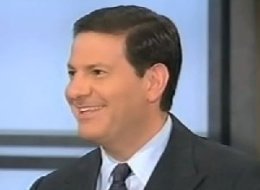
What it is, is a conference designed to expose elected officials to other elected officials and discuss the issues that challenge and enhance life at the local level. At the closing banquet we were served a fairly decent bacon wrapped chicken (I don't eat bacon) and the commentariat stylings of Time Magazine's NYC based Beltway hack, Mark Halperin.

                                                   (one of the MSNBC Morning Joe guys)

After some rather practiced tired rubber chicken belt banter (hahahaha he is a regular guy like us!) Halperin went into the trade required "What's Wrong in Washington" Post Election analysis. It is what you would get watching him on tv or reading him on-line, just with nowhere near the lack of cleverness. Halperin's entire speech was/is not worth the efforts but what pissed off my fellow council person, who was sitting next to me (I was pissed off but he was pissed off because I continued to angrily whisper to him my rebuts to Halperin's inanities and he couldn't get to his dessert) was Halperin trotting out the "False Equivalence" game, better known as the "Everybody in Washington is Fucked Up" stratagem. While discussing that mythical beast known as the Fiscal Cliff nee Deficit Crisis, Halperin argued that the Washington game, i.e. the Congress' inability to come to compromise was the fault of the extremists in both parties and that true resolution could be found by finding the "common sense middle". I don't know what that common sense middle looks like but I suppose they were the creators of half slave/half free America, gradual suffragism America, state by state abortion law America (you get my drift) but I do know that those that support the "common sense middle" America are often guilty of lazy bread and sleepy meat thinking. I fairly shat my mind onto the floor thinking about how lazy Halperin and his colleagues are. The supposition that the few lefties in the Congress (the Progressive Caucus is not as bold as we would like to think) have the same amount of power as the Tea Baggers (almost a hundred strong in the Republican Caucus). I for one would have loved to see Affordable Healthcare Act come under serious negotiation under the cloud of a single payer system. I would love to see "Increase social services!" become a ubiquitous part of the Democratic Caucuses attempt to achieve party alignment on budget votes. But these are not issues or the type of issues Centrist Democrats have to reckon with to make their base happy. Speaker Boehner however, must take seriously, Creationism, Climate Denial, Prayer in School and the limiting of a women's ability to make health care choices on damn near every issue he has to take before his caucus. The tail wags the elephant so effectively that there is no difference between the two.  Halperin's unwillingness to do what pronounced Condservative Norm Ornstein has dared to do, which is admit the Republican Party, in its dealings with the Democratic Party, is like Israel's Likud Party with the Palestinians, fundamentally opposed to peace and cooperation and only interested in domination and submission. Hence, the Republican Party creates and maintains; an ungovernable circumstance, a failing government and the erosion of faith in the government's ability to do anything. Which by the fucking by is not everyone's fault. It's the fault of the republicans, the conservatives, the crypto-christianists, the climate deniers, the creationists, the misogynists, the racists and the xenophobes who have been embraced by the 3 people in the Republican Party that can remember what Nelson Rockefeller looked like.

Thursday, November 29, 2012

Obama's talking to himself again

It's good to know that Mr. Obama's omnidirectional placation sensors are still online, even after a grueling campaign season. (And by 'good to know,' I mean 'oh god.') In an aptly entitled piece - 'Snatching Defeat out of the Jaws of Victory' - Robert Kuttner points out that the president is negotiating with himself again, before he's anywhere near the negotiating table. This time it's about the so-called fiscal cliff, with regard to which Mr. Obama has freely declared, via the apparently indispensable Erskine Bowles, that he may be 'flexible' on the question of putting tax rates for top earners back to what they were before the Bush tax cuts took effect. (And by 'be flexible' he means 'may not bother with it, even though I have leverage now that the election is done, and even though the bulk of my constituents want it.')

Kuttner's best line:
Obama still has a novice’s habit of softening his negotiating position going in, rather than holding possible concessions in his pocket for the final round. Republicans just take the concession as the new starting point and don’t concede anything in return. Where is his learning curve on this? Lyndon Johnson or Harry Truman would weep.

Wednesday, November 28, 2012

Today in 'What Everyone Knows' (11-28-12)


Everyone knows that public sector pensions are driving US states into insolvency, and that the road to fiscal sanity runs through virtuous austerity, and requires that we rein in these public sector commitments. That piece of common knowledge leads to stories like this one: stories that blame the pension problem - that is, that parrot 'fiscally conservative' politicians who blame the pension problem - for looming threats to vital governmental functions.

Here's how all that looks in Pennsylvania, where the state budget secretary released a report (a policy report, mind you, not a political document reflecting party discipline on a matter of ideology) saying just what you think it would say. First: "Without reforms, the state could be forced to cut funding for public safety, health and human services, education, roads and bridges." Then, the solution, as reported by Reuters: "Instead of raising taxes or cutting current retirees' pension payments, [PA Governor Tom] Corbett should consider increasing employee contributions, raising the retirement age and moving away from a defined-benefit plan, the report recommended."

What this story and stories like it leave out is that the pension problem is not just a problem; it is the core of a political tactic, and the tactic involves treating the problem as a fetish. The pension problem becomes a fetish in the sense that it is treated as a magical phenomenon, with no discernible causes or relations to other states of affairs. So it's not as if pension funds lost value when the bursting housing bubble took down state revenues, or when the stock market collapsed afterward. (Recognizing that factor might put the question of increasing revenue on the table. Or the question of what else took down state revenues, including shady Wall Street financing deals.) And it's not as if these public funds were throwing good money after bad by contracting with Wall Street investment managers, whose work underperforms both their benchmarks and cheaper index funds that are not actively managed. (Recognizing that factor might put on the table the question of our ongoing fealty to Wall Street, and of Wall Street's virtually unacknowledged responsbility for the dire economic straits that most people not on Wall Street now face in one way or another.) It's just that we've finally come to see that we can't afford these pensions, no matter what.

I mention this fetishization of the problem not to say that the underfunding of public pensions is not really a problem - it is a problem, don't get me wrong, given the horizons of our politics and economic policy now. I mention it because it is they key to a political strategy, one of the defining ones of our time. The pension issue is constructed not just as a problem but as the problem, when it might be construed instead as one of the many symptoms of some deeper problems. But treating public sector pensions as the main problem is nicely compatible with campaigns to shrink the state, and to discipline labor, and to foment tensions between private sector workers and their public sector counterparts as a way of disciplining labor, and so on.

Thursday, November 22, 2012

Thinking Thanksgiving, part 2: What to the Wampanoag is the Fourth Thursday in November?

Yesterday I introduced the idea of bracketing as a way of accounting for my enjoyment of things that might otherwise be objectionable, like the film '300.' My hope was that this idea could then serve as a way to explain my posture toward Thanksgiving. The posture I have in mind is probably familiar. I recognize that the events we're meant to celebrate today were part of the first act in a drama of expropriation, colonial aggression, and, depending on how one consents to use this most controversial of terms, genocide. But this recognition does not move me to repudiate the holiday, or to reframe it as a day of mourning. Yesterday I thought bracketing was the key to this ambivalence. Today I think the key to making that point has to do with the great abolitionist Frederick Douglass.

Wednesday, November 21, 2012

Thinking Thanksgiving, part 1: on '300'

I am a big fan of the film '300.' My admiration for the film survives the liberties it takes with history, which might just mean that I'm not an historian. More interestingly, my admiration also survives the film's ethical flaws. I mention this now, today, because I think Thanksgiving Day counts as a holiday for me, rather than as a day of mourning, for the same reason that '300' counts as a piece of entertainment rather than (just) as a piece of propaganda. The reason: I've become quite skilled in the fine art of judicious bracketing. By the time I finish this post I hope to have decided whether this is a good thing.

Today's Sports Short (11-21-12)

Apparently some kid scored 138 points by himself in a D-III game (on 108 shots, but still). I have one thought about this, inspired by Jalen Rose's hilarious account of Kobe scoring 81 (video) against his Raptors: "Hey Coach... you think we might wanna double-team that guy?"